


What Are Marketing Goals? 10 Common Marketing Goals for 2024
Setting marketing goals in the marketing and communications industry can be seen as a double-edged sword. On one hand, continuously raising your goals can encourage a company to sustain long-term growth. On the other hand, setting marketing goals can also lead a business to put its own interests above the needs of consumers.
So what are marketing goals? And how do you set marketing goals that meet the SMART standard? Let The7 answer these questions in detail with the information shared below!
ONLINE MARKETING SERVICES AT THE7:
1. What Are Marketing Goals?
A marketing goal is a specific, measurable objective that helps you meet broader business goals. For example, it can aim at generating quality leads, raising brand awareness, increasing customer value, and improving the brand referral rate.
In a marketing campaign, the lack of clear goals leads to wasted resources, because you cannot measure the impact or value of your marketing efforts. Goal-oriented marketing helps define purpose, direction, and vision.
For any individual or organization, these goals are the key to personal, departmental, and business success. Achieving them shows that you are making a meaningful and valuable impact in the marketing field.

2. Why Are Marketing Goals Important?
Marketing goals play an extremely important role in managing and setting strategy for the marketing department and the entire company. These goals not only provide guidance but also define the purpose and vision the business is working toward in marketing.
Setting measurable goals is essential so the marketing team can evaluate its performance. These goals may include increasing brand awareness, boosting online engagement, increasing sales, or even reaching new markets. For each goal, you need specific metrics and an implementation strategy.
A clear marketing plan helps the marketing team know where they are headed and how they will reach their goals. The result of meeting these goals is revenue growth and balanced development across every area of the business.
3. How to Set Marketing Goals That Meet the SMART Standard
SMART marketing goals are realistic, focused, and quantifiable goals that a business or company can easily work toward. To set marketing goals that meet the SMART standard, you need to understand each letter of SMART. It is an acronym that helps businesses clearly define their goals. Here is the breakdown:
3.1 S – Specific
This is the most specific, detailed level of a goal. In marketing terms, a company should state exactly which metric it wants to improve, such as leads, website visitors, or consumers. At the same time, the team within the business also needs to define which members will work on it, along with the resources they will have and their action plan.

3.2 M – Measurable
M stands for Measurable, meaning goals that can be measured with numbers. If a company wants to evaluate its employees’ progress, quantifying goals is a must. This helps your business achieve X% growth in its leads, in the number of visitors, or in customers.

3.3 A – Attainable
This means the goal must be feasible and achievable. Make sure the X% figure can actually be reached in your specific circumstances. If your business’s blog traffic grew 5% last month, aim for an 8–10% increase this month rather than 30%. Setting goals based on your analysis is extremely important, and a company needs to weigh this carefully.

3.4 R – Relevant
R – Relevant means the goal is closely tied to the business’s mission and vision. In other words, the company’s goals need to be closely aligned with current trends. For example, has the business’s decision to grow on Facebook brought in more revenue? Has the company actually increased its organic reach on Facebook since the platform changed its algorithm? If you are aware of these factors, your business is more likely to set goals that are realistic, beneficial to the company, and achievable.

3.5 T – Time-Bound
This is a goal or plan built around a timeframe for completion. Attaching a specific deadline to a business goal puts pressure on employees to get it done. This helps the company make significant progress over the long term. If a business or company does not set a deadline, reaching the goal will take too long to deliver lasting success.

4. Linking Marketing Goals to Business Goals
You need to understand your business’s specific objectives before you set marketing goals. For example:
- If your business wants to grow its customer base, set a goal of generating leads. This helps optimize resources and supports the sales team in closing deals.
- If your business’s overall goal is to increase revenue by expanding its customer base, you can set a goal focused on generating more leads to support that larger business goal.

5. The 10 Most Common Marketing Goals Today
Driving and increasing sales, raising awareness of services and products, and establishing brand positioning are among the most important goals of an overall marketing strategy for businesses today. Specifically:
5.1 Drive and Increase Sales
Driving and increasing sales is one of the 3 key goals of advertising, communications, and marketing. Marketing needs to deliver a good return on investment, meaning the increase in sales should be significantly greater than the marketing cost. Of course, a company should also spell out these numbers. Today, many businesses struggle to set a sales growth goal based on a specific percentage. That is why the more specific your marketing goal, the better.

5.2 Promote Your Services and Products
Advertising and marketing communications also help a business or company raise customers’ awareness of the services and products it already has on the market. Or, the company promotes its products and services to as many potential customers as possible.
5.3 Establish Brand Positioning and Manage Your Brand
Getting customers’ attention in today’s crowded market is very hard for a new business. For example, the marketing goal for a company with little public awareness might be to become a leading, reputable brand in its industry that others trust and value. To reach this goal, a company can run ads in places that potential customers visit often or in densely populated areas.

5.4 Rank Higher in Search Results
When your website ranks high on search engine results pages (SERPs), customers’ brand awareness also grows. That is because internet users can then easily find your business online and contact you or buy whenever they need to. As you can see, the goal of ranking higher in search has a direct impact on your business’s revenue.
When you set this marketing communications goal, focus on researching and targeting the keywords directly related to your products and services and your industry.
Examples of goals for ranking high on search results pages:
- Win 5 more “featured snippets” this month
- Improve rankings for 35 keywords this quarter
5.5 Increase Website Traffic
Once you rank high on the search results page, your business will reach more of its target audience. As a result, your website traffic increases noticeably. This is also the final stop for converting leads.
To reach the goal of increasing website traffic, add call-to-action (CTA) buttons and internal links across your website. This helps users navigate your site and complete their purchases more easily.

Examples of website traffic goals:
- Increase traffic by 30% this year
- Increase the PPC CTR (click-through rate) by 10% this quarter
5.6 Increase Engagement With Your Brand
When your website has a high bounce rate, Google lowers its trust in your site. That makes it harder for you to rank well on the SERP. So set specific goals to boost engagement between customers and your brand.
Examples of goals for increasing brand engagement:
- Respond to 95% of user comments on social media
- Increase the time customers spend on your website (time on site) to 2 minutes by the end of the year
5.7 Generate Leads
Not every lead meets the criteria a business is looking for. That is why marketers need to “create” qualified leads themselves. In other words, these are people who are genuinely interested in the business’s products and services and have a high likelihood of buying. To do this, you need to research and make full use of the keywords that people most likely to buy will choose when searching for product information.
Examples of lead generation goals:
- Get 65 new newsletter subscribers this month
- Get 150 ebook downloads this week
5.8 Convert Users
Among all marketing plan goals, user conversion plays a pivotal role and directly determines your business’s profit. Once you have attracted plenty of customers to your website through PPC, SEO, and other strategies, what you need to do next is turn them into loyal customers.
If you want to increase your customer conversion rate, provide plenty of complete online marketing materials and conversion opportunities on your website. This helps customers move through the buying process as conveniently as possible.

Examples of user conversion goals:
- Receive 150 price quote requests this week
- Increase purchases by new customers by 5% per month
5.9 Increase Customer Lifetime Value (CLV)
Another marketing goal many companies adopt is to maximize the total value of a customer’s orders, from their first purchase to their last, or to increase customer lifetime value (CLV).
This goal stems from the fact that retaining existing customers costs 10 times less than acquiring new ones. That is why improving lifetime value and customer loyalty is extremely important.
To achieve this valuable goal, the most important thing is for a business to keep improving the quality of the service it provides to customers.
Examples of goals for increasing customer lifetime value (CLV):
- Collect 25 positive customer reviews this quarter
- Respond to 15 customer reviews on Google this month
5.10 Make Smarter Business Decisions With Marketing Data
The last but equally important of the marketing goals is to evaluate the marketing activities you have carried out and use that information to improve the effectiveness of future campaigns. This is an important foundation that influences your business’s overall decisions.
Tools that track marketing campaign performance, such as Google Analytics, are a great help here. They provide valuable data showing which marketing activities are having a positive effect and which are not. That way, you can learn from the results, build on your strengths, and avoid repeating past mistakes.
Examples of goals for making use of marketing data:
- Analyze your SEO campaign and use that data to increase SEO conversions by 30% this quarter
- Find and fix 3 weaknesses in your business’s conversion funnel this month
6. Conclusion
By now you should understand what marketing goals are and how to set goals that meet the SMART standard. Passion for your work is the single biggest influence when setting goals. However, we sometimes become obsessed with optimizing results and forget about compelling content and staying on track with brand management. That is why your company needs to think carefully before setting goals with the SMART formula.
Beyond helping your business set SMART marketing goals, The7 also delivers full-scope Digital Marketing and one of the most trusted marketing strategy consulting services available today. So get in touch with us for more detailed advice on marketing communications goals.
Learn more about marketing in these articles:
- A step-by-step guide to creating a detailed overall marketing plan from A to Z
- What is marketing? The 13 most popular types of marketing in 2023
- Building a marketing strategy for your business’s services and products
- How to create a marketing strategy for a new product launch
- What is the SWOT model? How to build an effective SWOT analysis
- What is concentrated marketing? How to apply it in practice
- What is the Marketing Mix strategy? Models within the Marketing Mix

Nguyễn Đình
Bảo




As CEO of The7, I am committed to sharing practical, useful knowledge with every reader. Every article on The7 is based on my 7 years of hands-on experience in marketing — Facebook advertising, LinkedIn advertising, Google advertising, and marketing strategy. I hope you take away plenty of insight from these posts and apply it successfully in practice.
Related Articles
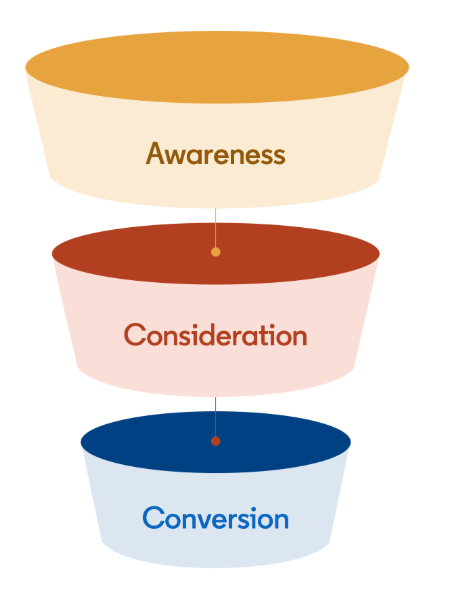
Building a Full-Funnel Content Marketing Strategy on LinkedIn
Table of Contents Toggle Why Build Content Marketing for the Full Marketing Funnel? (Why Full-Funnel Content Marketing?)Creating Your Strategy (Creating Your Strategy)Implementing Your Content Strategy (Rolling out your content strategy)Summary...

Designing Creative Content for LinkedIn
Table of Contents Toggle Why Is Good Creative Content So Important? (Why is Good Creative Important?)Key Components of Creative Design (the core elements of creative design)Summary (summary) Why Is Good...
Building an Organic Business Presence on LinkedIn With a LinkedIn Page
Table of Contents Toggle Why Have a LinkedIn Page?Establishing Your LinkedIn PageKeeping Your LinkedIn Page ActiveThe Measure of SuccessSummary About LinkedIn Page (Summary) Why Have a LinkedIn Page? For a...

6 Best LinkedIn Marketing Strategies for B2B in 2026
Table of Contents Toggle LinkedIn 2026: Where B2B Decisions Get MadeStrategy #1 – Why Is LinkedIn the Best B2B Marketing Channel Today?1. Decision-makers are concentrated here2. Users are in work...

7 Social Media Trends for 2026: The Era of Real Value, Real Conversion, and Real People
Table of Contents Toggle Social media is entering the biggest restructuring of the decadeTrend 1: Why is buying directly in-app becoming the new standard for 2026? (On-Platform Conversion)What should businesses...

What Is TikTok Marketing? Effective TikTok Marketing Strategies
TikTok has been topping the global rankings of the most downloaded and most visited apps. That makes it a gold mine for marketers who love creativity. In this article, The7...