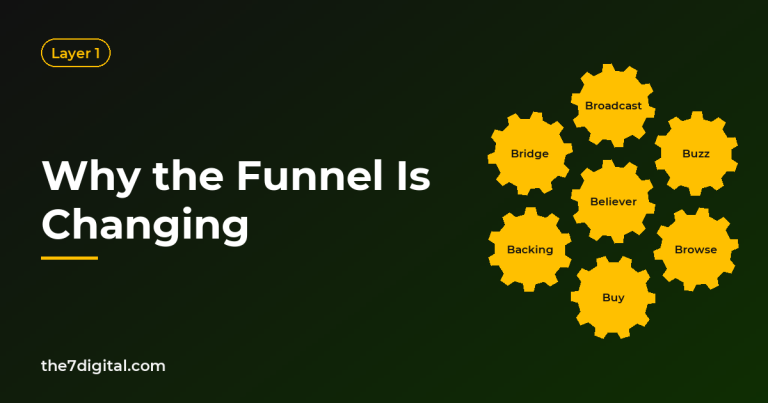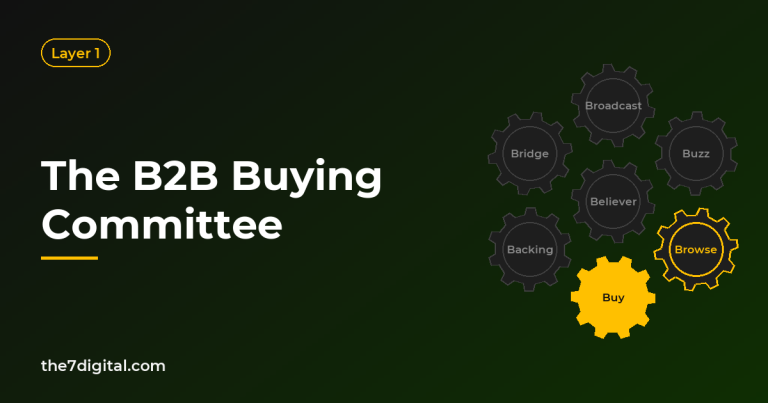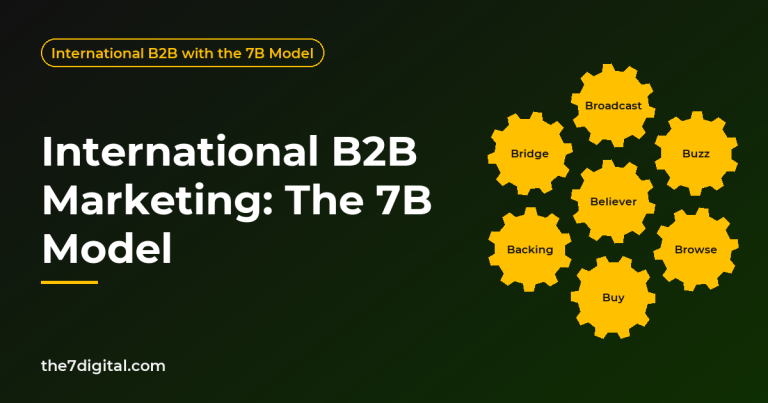
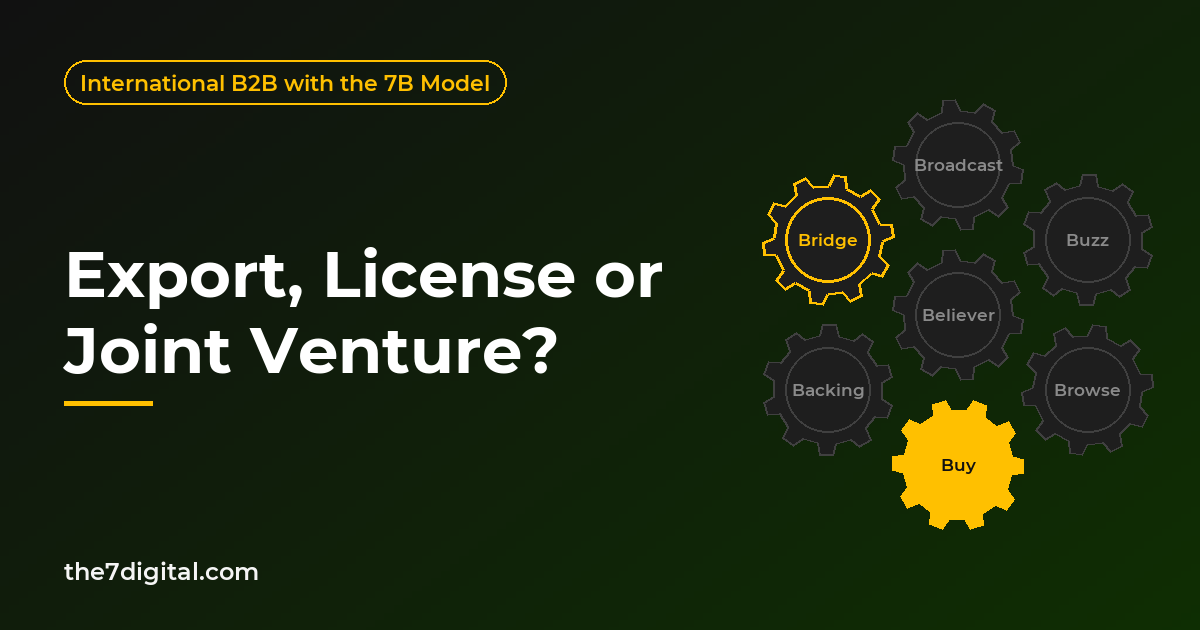
Summary: Market entry modes for B2B are exporting, licensing, a joint venture or your own subsidiary. Do not choose on speed and profit alone: each mode hands some gears to a partner. Choose by what you must keep. In the 7B Model, entry modes belong to the Buy and Bridge gears.
Arm’s largest single customer is a company Arm does not run. Arm China accounted for about 16% of Arm’s total revenue in the fiscal year that ended in March 2026 (Arm, 2026), down from about 24% in fiscal 2023 (Arm, 2023). Arm’s own stake is an indirect 4.8% or so, it has no direct management rights, and the filing says Arm China “operates independently of us” (Arm, 2026).
Arm China holds exclusive rights to sublicense certain Arm technology to customers in China, and it uses Arm’s trademarks in its own marketing and branding (Arm, 2026). The name is Arm’s. The signatures on Chinese contracts are not. Arm kept its name; someone else holds the pen.
If you are weighing a distributor, a licensee or a joint venture partner for Vietnam or ASEAN, you face a smaller version of the same question: which gears are you handing over, and which come home when the contract ends? Choosing international markets stopped once you had picked a country; how to step in is the question here. The stories of Arm, Fuji Xerox and SANY answer it.
Export, license, joint venture or subsidiary: what is the difference?
The four modes differ on two dials: how much you put in (capital, people, years) and how much you still decide (who signs with the customer, who serves it, whose name sits on the product).
Exporting runs from selling through a trading company, where the end user may never learn your name, to finding buyers yourself through distributors and agents (choosing international B2B channels covers that choice). A license lets a foreign partner use your technology, patents or brand to make and sell in return for royalties. A joint venture is a company you and a partner fund together in the target country, sharing control, profit and risk. A subsidiary is one you build from scratch (greenfield) or buy.
Ordered by commitment, the four modes form a ladder. Johanson and Vahlne (1977) described firms gradually acquiring knowledge about a market and raising their commitment to each country as that knowledge grew; researchers call it the Uppsala model. Thirty-two years later, Johanson and Vahlne (2009) viewed the business environment as a web of relationships and argued that outsidership, more than psychic distance, is “the root of uncertainty”.
In my reading, outsidership is a missing Bridge. Each rung of the ladder is also a choice about who bridges for you in that country and what they keep. The ladder measures what you put in. It also measures what you give away.
Which five criteria compare entry modes?
Professor Dae Ryun Chang of Yonsei University, in his International B2B Marketing course on Coursera, compares entry modes on five criteria from Gillespie and Hennessey’s Global Marketing (2011). I have recast them as five questions:
- How fast do you need to get in? Speed here means the Buy gear: how soon you hold a first contract. An acquisition can be quicker than people expect: SANY says its Putzmeister deal took just over half a month of negotiation (SANY, 2024).
- How much of the long-run profit do you want to keep? The less you commit, the thinner your share: Arm’s revenue from Arm China is a percentage of the license and royalty fees Arm China earns from its own customers (Arm, 2026).
- How strong is the competition, and are you feeding another competitor? Arm’s contract bars Arm China from developing microprocessor cores, yet Arm itself warns that Arm China may develop other competing products (Arm, 2026).
- How wide is the cultural distance? The wider it is, the more you need people who can read the meeting room and hear Buzz there. A joint venture buys that knowledge with some control.
- Does the host government welcome this way in? Rules can open one door and shut another: the EU rule on public medical-device tenders closed the Buy gear for a whole group of suppliers.
Those five questions measure what you receive. The 7B Model adds a sixth, about what you hand over: which gears pass to the partner, and which must stay with you. Buy and Bridge are what you hire a partner to hold. Broadcast and Backing are not.
Who captains each gear in each entry mode?
The 7B Gear Captain Matrix gives every gear a captain inside your company. Enter through a partner and some captains sit in the partner’s office. The table is my reading of the common pattern, not a survey; your contract may differ.
| Gear | Export via a distributor | License | Joint venture | Own subsidiary |
|---|---|---|---|---|
| Broadcast | You | Licensee, in your name | Shared | You |
| Buzz | Partner hears it first | Licensee | Shared | You |
| Browse | Shared | Licensee | Shared | You |
| Buy | Partner | Licensee | The JV | You |
| Believer | Partner | Licensee | The JV | You |
| Backing | You, if cases carry your name | The licensee, under your name | Whatever the contract says | You |
| Bridge | The partner is the bridge | The licensee is the bridge | The partner is the bridge | You build or buy it |
| What stays with you when it ends | Your name and content, if you kept them | Your name and technology | What the contract says | Everything |
| The 7B Model · the7digital.com | ||||
Read it by row. Buy and Bridge are why you look for a partner: they sign with the customer and bring the customer in. Believer follows Buy: whoever signs usually serves, and whoever serves holds the trust. So when a partner opens the Buy door in a new country, it opens into the partner’s house.
Broadcast, Backing and the last row are what you must keep. Buyers pick the name that already has a place in their heads (the mental availability article explains how), and the article on international B2B channels shows why Backing follows the name. The last row is the test: a cell that says “if you kept them” or “what the contract says” marks a clause to write before you sign.
Arm China: Arm’s name, someone else’s signature
On March 28, 2022, Arm transferred its entire equity interest in Arm China to a subsidiary of SoftBank Group. About 48% of Arm China is held by Acetone Limited, which SoftBank Group controls, about 35% indirectly by HOPU Investment Management Company and about 17% by other Chinese parties (Arm, 2026).
What Arm sees is paperwork. Arm China’s payments are based on the financial information it provides. The contract gives Arm audit rights, yet Arm has received late payments and has had trouble getting timely, accurate information.
This is the license column of the table in real life. Chinese buyers sign with Arm China, so the Buy gear opens into Arm China’s house, and Bridge lives there too. Broadcast still speaks Arm’s name, through a company Arm does not run. Late money and slow data are a stuck gear, and one stuck gear slows the whole flywheel.
The license protects Arm’s cores. It does not give Arm the signature on the contract. Grant exclusive rights to a licensee or distributor in Vietnam and you are building a small Arm China: write into the contract who holds the customer list, who may use your name and which sales data reaches you each month.
Joint venture or acquisition: who keeps the name?
A joint venture shares gears with a partner; an acquisition buys someone else’s. Both ask one question: when the deal changes, who owns the name on the product?
Fuji Xerox: A borrowed name with an end date
In 1962, Fuji Photo Film and Rank Xerox set up Fuji Xerox as a 50/50 joint venture capitalized at 200 million yen (FUJIFILM Business Innovation, accessed 2026). On November 5, 2019, Xerox announced the sale of its 25% stake to a FUJIFILM subsidiary (Xerox, 2019).
In January 2020, Fuji Xerox told Xerox it intended to end its technology agreement on its expiry date, March 31, 2021. An amendment from the November 2019 transactions let it keep using the Xerox brand for two years while it moved to a new brand, in exchange for an upfront prepaid fixed royalty of $100 million. Xerox expected Fuji Xerox to pay it, and expected its own entry into the Fuji Xerox territory under the Xerox brand to be deferred to at least April 1, 2023 (Xerox, 2021).
In 2021 the company became FUJIFILM Business Innovation and began selling Fujifilm-branded products outside Japan and Asia Pacific. In April 2024 it announced it was accelerating sales of Apeos printers in Europe, starting with Italy (FUJIFILM Business Innovation, 2024).
Put in gear terms, a joint venture splits gears by territory and function. For decades the venture held Buy, Believer and Bridge across its region, while the name, and with it much of Broadcast and Backing, belonged to someone else. When the technology agreement lapsed, the machine split in two: Fujifilm kept the customers and the bridge but had to rebuild the name, and $100 million was the price of two years to do it; Xerox kept the name but had no bridge there. Nobody held all seven gears.
In a joint venture, the clause on the name is the exit clause.
SANY and Putzmeister: Buy the bridge, keep the builder’s name
SANY, the Chinese construction machinery maker, entered Europe twice, on two rungs. In 2009 it entered Bedburg, Germany, then built an ecosystem from R&D to after-sales service across the continent (SANY, 2025b). The second rung came on January 31, 2012: 360 million euros, with CITIC Industrial Fund, for all the shares of Putzmeister, the German company founded in 1958. SANY calls it a “lightning acquisition” and the largest acquisition by a Chinese company in Germany at the time (SANY, 2024).
Thirteen years later, SANY’s bauma 2025 announcement still listed Putzmeister under its own name, with its own booth, alongside SANY (SANY, 2025a). The trade show story is in trade shows in the 7B machine.
For SANY, 2009 meant building gears one by one, with a new Chinese name that would have had little Broadcast or Backing next to a German one buyers already knew. Its 2012 deal bought gears already turning: Backing in a name more than fifty years old, Believers among customers already running its machines, Bridge in the relationships it had. SANY did not repaint the name it bought. Keeping it keeps a position buyers already hold in their heads, the point of B2B positioning.
An acquisition hands you someone else’s gears. Erase their name and you throw away the most expensive part.
Can you go digital first and incorporate later?
Yes, for the gears that live online. Broadcast, meaning content and ads in the local language, and Browse, through your website, LinkedIn, YouTube and ungated documents (Mô hình 7B cho B2B book, chapter 6), can run from home, and so can part of Backing, such as cases and reviews. B2B content marketing covers the content you own, and LinkedIn Ads for cross-border B2B the paid side. What needs people on the ground is the signature on site and the engineer who shows up when a machine stops, so the first handshake in a market is often a partner, with the entity coming after.
When should you change mode? Watch three signals. First, searches for your brand name and engagement from the right companies in that country rise, but deals stall at the signature or at service on site: add presence. Second, your partner holds more of the customer list than you do: renegotiate before renewal, the Fuji Xerox lesson. Third, you see the market only through your partner’s numbers, as Arm sees Arm China’s revenue: build a direct view, such as your own site in the local language.
With no entity or people in the country yet, the paid side of a digital-first entry can still run, as one machine within The7’s comprehensive digital marketing services.
A legal entity is a commitment to the host state. A name is a commitment to the buyer. The second should come first.
Where do market entry modes fit in the 7B Model?
Going into a new country is a process of many rounds, so the way in sits mostly in the Buy gear: A process of many people and many rounds; a door, not the final wall. The first mode you choose is one round, not the last, which matches the incremental commitment of Johanson and Vahlne.
Next to it sits the Bridge gear: Customers bring in others through referrals, communities and partners, and the flywheel amplifies itself. Distributors, licensees and joint venture partners are all bridges, but bridges that sell your own product.
They connect through the loyalty loop: Believers create Backing, Backing creates Bridges, and Bridges bring new people back into Broadcast, Browse and Buy. Whoever holds the Believers in a country holds the loop there. In the three operating layers, Buy sits in demand capture, Bridge in amplification, and Believer is the connecting loop. Of the three energy flows, paid can run before you incorporate, owned must sit on your domain and under your name, and earned-and-shared flows through partners.
The 7B Model was developed by Nguyen Dinh Bao (Bao7) at The7 Digital and is set out in full in the book Mô hình 7B cho B2B (Stop Begging, Start 7B). New readers can start with what the 7B Model is and the 7B Glossary.
Selling B2B into Vietnam and ASEAN
Foreign money now enters Vietnam through three doors at once. In the first ten months of 2026, foreign investors registered US$30.73 billion for 3,478 new projects and added US$16.13 billion to 1,079 projects licensed in earlier years (National Statistics Office via Thoi bao Tai chinh Viet Nam, 2026). Another 2,616 capital contributions and share purchases were worth US$7.99 billion, up 49.6%, and total registered FDI reached US$54.85 billion, up 74% (National Statistics Office via Thoi bao Tai chinh Viet Nam, 2026).
In my reading, the three doors are this article’s entry modes in public data. New projects are the build-from-scratch side. Expansions of older projects are the Uppsala ladder: people already in, adding commitment. Share purchases are seats at someone else’s table, and whoever takes that door should remember SANY: keep the local name if it carries Backing, until yours has earned the same.
Fuji Xerox shows a ladder climbed country by country: the Philippines in 1965, then joint ventures or agents elsewhere in Asia Pacific, then a regional hub in Singapore in 1991 (FUJIFILM Business Innovation, accessed 2026). A region like ASEAN rewards a mix of modes, one country at a time, with a hub.
Money can move before an entity does. XTransfer, a Shanghai-based cross-border B2B payments platform, says its local accounts and local collection cover key markets across ASEAN, Latin America and Africa, in more than 30 local currencies, so buyers can pay directly in their own currency (XTransfer, 2026). Those are the company’s own claims, so check which countries it actually covers. Part of the Buy gear, an easy way to pay, may be simplified before you incorporate.
Before your first invoice in Vietnam, write the gear split from the table into the contract: who owns the Vietnamese website and domain, the customer list and the case studies. Whether you also need an office or an entity is a legal question, and choosing international B2B channels covers the representative office. Check current rules with local counsel.
Conclusion: Choose the way in by what you keep on the way out
Three stories, one lesson: Fuji Xerox agreed to pay for two more years of a name that was not its own, Arm kept its cores while the signature on Chinese contracts sits with someone else, and SANY bought the bridge and the name together and kept both.
The question is not which way in is fastest. It is what you still hold when you have to leave.
The previous article, choosing international markets, picked the country; the next, standardize or localize, asks which gears to rebuild once you are in. The pillar article, international B2B marketing with the 7B Model, maps the whole series.
Frequently asked questions
Which market entry mode suits a first move into Vietnam?
Usually exporting through a distributor or agent, plus a digital presence in Vietnamese under your own name, then more commitment as you learn the market (Johanson and Vahlne, 1977). Whatever the mode, keep Broadcast and Backing in your name.
Do I need a legal entity to sell B2B in Vietnam?
Not to start: a distributor or agent can sell for you. A representative office may run market surveys and some trade promotion but may not directly conduct profit-generating activities, while a branch may buy and sell goods (LuatVietnam, 2022). Rules change, so check current requirements with local counsel.
How is licensing different from a joint venture?
A license lets a partner use your technology, patents or brand for a fee, with no shared capital. A joint venture is a company you co-own, sharing control and profit. Arm’s revenue from Arm China is a percentage of the fees Arm China earns from its own customers (Arm, 2026).
What should a joint venture or license contract protect?
Your name and trademarks, domain, content, customer list and data, plus clear terms for the day you part. A 2019 amendment let Fuji Xerox keep using the Xerox brand for two years after its technology agreement ended, for an upfront prepaid royalty of $100 million (Xerox, 2021).
International B2B with the 7B Model · Part 21 of 24 · Previous: Choosing International Markets · Next: Standardize or Localize? · Pillar article: International B2B Marketing: The 7B Model
References
- FUJIFILM Business Innovation (n.d., accessed 9 November 2026). Corporate History. https://www.fujifilm.com/fb/en/about/corporate-fb/history/corporate
- Xerox Holdings Corporation (2021). Form 10-K for the fiscal year ended December 31, 2020. https://www.sec.gov/Archives/edgar/data/108772/000177045021000013/xrx-20201231.htm
- Xerox (2019). Xerox Restructures FUJIFILM Relationship, Will Receive $2.3B from Related Transactions (press release, Exhibit 99.1 to Form 8-K). https://www.sec.gov/Archives/edgar/data/108772/000119312519283986/d828080dex991.htm
- FUJIFILM Business Innovation (2024). FUJIFILM Business Innovation Accelerates the Sales of Digital Colour Multifunction Printers in the European Market. https://www.fujifilm.com/fb/en/news/112e
- Arm Holdings plc (2026). Form 20-F for the fiscal year ended March 31, 2026. https://www.sec.gov/Archives/edgar/data/1973239/000197323926000097/arm-20260331.htm
- Arm Holdings plc (2023). Registration Statement on Form F-1. https://www.sec.gov/Archives/edgar/data/1973239/000119312523216983/d393891df1.htm
- SANY Group (2024). In Deep Remembrance of Karl Schlecht, Founder of Putzmeister. https://www.sanyglobal.com/press_releases/3584/
- SANY Group (2025a). SANY Set to Unveil Intelligent, Green, and Efficient Future of Construction Machinery at Bauma 2025. https://www.sanyglobal.com/press_releases/4582/
- SANY Group (2025b). SANY Impresses at bauma 2025 with Sustainable Lineup and Digital Intelligence. https://www.sanyglobal.com/press_releases/4583/
- Johanson, J., Vahlne, J.-E. (1977). The Internationalization Process of the Firm: A Model of Knowledge Development and Increasing Foreign Market Commitments. Journal of International Business Studies, 8, 23-32. https://link.springer.com/article/10.1057/palgrave.jibs.8490676
- Johanson, J., Vahlne, J.-E. (2009). The Uppsala internationalization process model revisited: From liability of foreignness to liability of outsidership. Journal of International Business Studies, 40, 1411-1431. https://link.springer.com/article/10.1057/jibs.2009.24
- Dae Ryun Chang, Yonsei University (n.d., accessed 9 November 2026). International B2B (Business to Business) Marketing, Coursera (Module 3 cites Gillespie, K. and Hennessey, H. D. (2011), Global Marketing, 3rd ed.). https://www.coursera.org/learn/b2b-marketing
- XTransfer (2026). XTransfer Hits 800,000+ Global Clients (PR Newswire release). https://en.prnasia.com/releases/global/xtransfer-hits-800-000-global-clients-518715.shtml
- National Statistics Office via Thoi bao Tai chinh Viet Nam (2026). Việt Nam thu hút 54,85 tỷ USD vốn đầu tư nước ngoài trong 10 tháng. https://thoibaotaichinhvietnam.vn/viet-nam-thu-hut-54-85-ty-usd-von-dau-tu-nuoc-ngoai-trong-10-thang-206324.html
- LuatVietnam (2022). Should a foreign company open branch or representative office? https://english.luatvietnam.vn/legal-news/should-foreign-company-should-open-branch-or-representative-office-4729-91748-article.html