


How to Build the Most Effective 4P Marketing Strategy in 2024
The 4P Marketing strategy helps a product stay resilient in a volatile, highly competitive market. To achieve this, businesses need to analyze several key aspects and then apply the most optimal strategy at the right time. Through this article, The7 will help you understand and implement a Marketing strategy in practice.
Check out the services of marketing services company The7
What is the 4P model in Marketing?
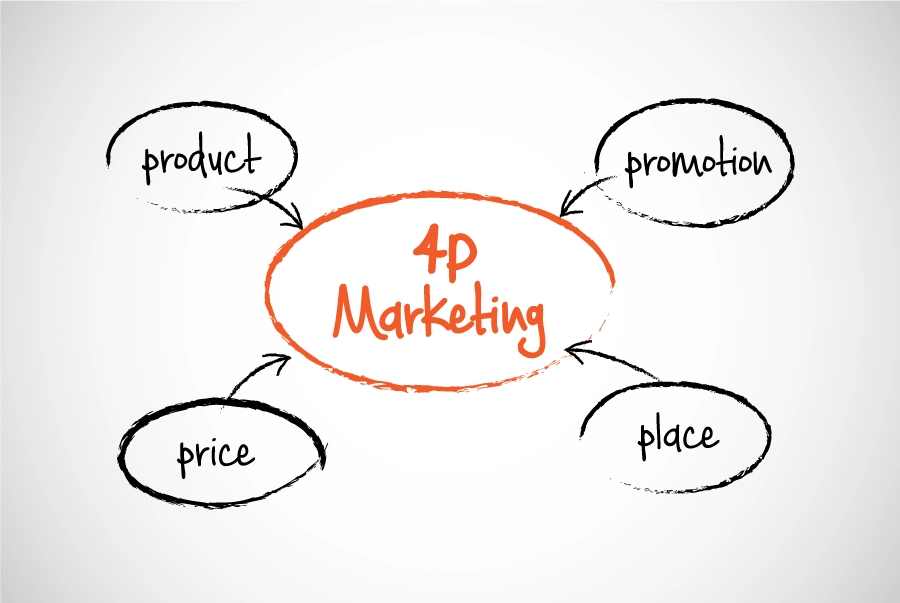
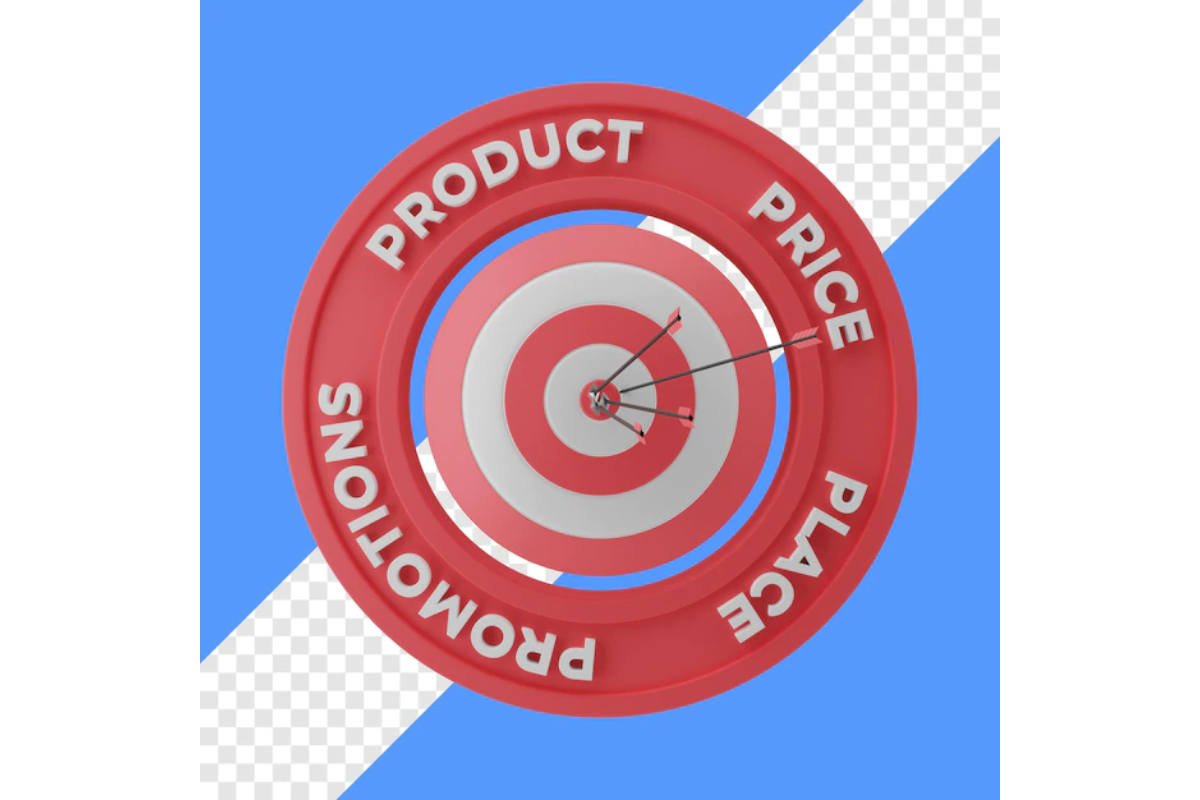
The 4P model in marketing is an important concept representing four fundamental elements: Product, Price, Place, and Promotion. Sometimes the 4P model is also known by another name — Marketing Mix. This model isn’t just a management toolkit; it’s a decisive factor in the success of a marketing strategy and directly affects a business’s revenue.
Basic elements that form the Marketing 4P strategy
As mentioned, 4P in Marketing is a marketing tool made up of four basic elements: product, price, distribution, and promotion. Businesses commonly use this method when launching new products. The section below will analyze each P factor in more detail.
Product
A product is any good or service capable of meeting a consumer’s needs or wants. To manage products effectively, marketers need a thorough grasp of the product life cycle, while business managers need to build a detailed plan to manage the product at every stage, including introduction, growth, maturity, and decline.
A product strategy is a detailed script of the direction and decisions a business makes regarding its product or service. It involves analyzing aspects such as the product/service, target audience, geographic location, value delivered to consumers, and business objectives.
There are 5 popular product strategies today:
- Product branding strategy
- Product mix strategy
- Product line strategy
- Product item strategy
- Product life cycle strategy
To build an effective product strategy, businesses need to answer important questions such as:
- What need does this product/service meet for customers?
- Does the target customer have any expectations for the product?
- How do customers use the product?
- Is the product’s packaging suitable and appealing?
- Can customers try the product before buying?
- Do the product’s size, name, and color suit customer needs?
- What outstanding advantages does the product have over similar products on the market?
Price
Price plays an important role and directly affects sales volume, which in turn impacts business profit. Market demand, production costs, competitors’ pricing trends, and legal regulations are the factors that determine the pricing process. Campaigns such as discounts also require careful consideration of whether they are necessary and appropriate.
The goal of an effective pricing strategy is to maximize profit and revenue for the business while ensuring an acceptable level of risk. This requires careful consideration to price the product/service reasonably, creating value for customers while also safeguarding the business’s commercial interests.
In marketing, there are many common pricing strategies, including:
- Market penetration strategy
- Price skimming strategy
- Product line pricing strategy
- Psychological pricing strategy
- Bundle pricing strategy
- Competitive pricing strategy
- Promotional pricing strategy
- Segmented pricing strategy
- Geographic pricing strategy
- Dynamic pricing strategy
To determine pricing, businesses need to answer important questions such as:
- What is the real value of the product/service?
- What are the production and business costs?
- How are competitors pricing their products?
- What impression does the business want to create with customers?
- What is the business objective when pricing the product/service?

Place
Place in the 4P Marketing Mix strategy involves the process of selecting locations to sell products. The main goal of managing distribution channels is to ensure the product is always available to customers at the right time and place.
The speed at which goods move plays an important role in determining profit margins. Getting products to points of sale quickly not only creates an opportunity to satisfy customers but also strengthens brand loyalty. As such, the Place factor in 4P Marketing helps ensure a product’s competitiveness in the market.
Today, there are 5 popular distribution strategies, including:
- Mass distribution strategy
- Exclusive distribution strategy
- Intensive distribution strategy
- Selective distribution strategy
- Franchising
To build a sound distribution strategy, businesses can address the following questions:
- Where do customers look for the business’s products/services?
- What kind of shopping experience does the business want to create for customers?
- What goal does the business want to achieve by choosing this distribution channel?
- Do target customers tend to shop online or at physical points of sale?
- What kind of delivery service do target customers expect?

Promotion
The 4P Marketing Mix strategy includes Promotion — the method of driving and communicating. Through it, consumers and partners learn more about your product. The channels used to implement it are also highly varied, such as:
- Advertising on mass media, television, newspapers, the Internet, etc.
- Direct marketing through catalogs, door-to-door product introductions, etc.
- Public relations through press conferences, exhibitions, and event organization.
- Personal selling…
To build an effective promotion strategy, businesses can answer suggested questions such as:
- Who is the business’s target audience?
- What message needs to be conveyed through the advertising?
- Which advertising channels will be prioritized?
- What is the best time to reach the target audience?
- Which advertising method is the most persuasive?

What is the “core” meaning of the Marketing Mix 4P strategy?
What does a business gain from the Marketing 4P strategy? You’ve likely already guessed part of the answer from the analysis above. The core values will be clarified further in this section.
| Meaning | Explanation |
Driving the creation of new products |
– The 4P marketing mix strategy helps businesses understand the market and consumer needs. This ensures up-to-date, trend-driven knowledge and ideas. From there, manufacturers can continuously create products that precisely satisfy customer wants.
– In addition, the analysis process also ensures the product is standardized. Quality meets regulations and customer expectations. The optimal outcome is delivering features and benefits that exceed market expectations. |
Enhancing brand image and reputation in the market |
– The ultimate goal of the strategy is to make the product widely known throughout the market. Therefore, brands need advertising and introduction activities both domestically and internationally.
– Enhancing the brand helps the business achieve the expected results. It’s not just about selling more products at that moment — it’s a way of nurturing stable, long-term growth. |
Creating a fair, healthy competitive environment |
– New products/services are launched to customers every day. Therefore, businesses need to continuously innovate and explore new features.
– A standout advantage is often a more attractive price than competitors. Applying the Marketing Mix 4P strategy is a way to make this happen. |
Advantages and disadvantages of the Marketing 4P strategy
The 4P strategy in marketing is the most fundamental model for implementing marketing strategies and is applied by no small number of businesses. The 4P model has many great advantages but also has some limitations, as follows:
Advantages of the 4P marketing strategy
– Easy interaction with customers:
When implementing the 4P model, businesses can quickly grasp customer sentiment and public opinion about their brand or the marketing strategies they’re running, through social media platforms.
If posts about your brand appear everywhere online and receive positive engagement, it means the business is on the right track in reaching its target audience.
– Systematic measurement of metrics:
The effectiveness of the 4P strategy is clearly reflected in data from mass media channels. This lets a business know whether its marketing campaigns are reaching the right audience effectively, which creates motivation for running the next campaigns.
– Smartly reaching target audiences:
Modern 4P marketing tools allow businesses to reach potential customers in a smart, selective way.

Disadvantages of the 4P marketing strategy
– Can be annoying to customers:
Every search query users make on the internet is tracked and remembered by search engines. These search engines then display ads based on your previous searches. This can make customers feel quite annoyed and uncomfortable.
– Easily overlooked: Ads on websites, social media, or mass media often don’t attract much customer attention. They are easily ignored by customers who have no need to buy the product.
– Fierce competition: In today’s fiercely competitive landscape, businesses must continuously innovate and refresh their content to keep it appealing. Otherwise, they risk being left behind by competitors. That’s why, alongside a good strategy, financial capacity also plays an essential role.

6 steps to develop an effective 4P Marketing strategy in 2024
There are 6 steps to developing a 4P strategy in Marketing, specifically:
Step 1: Identify the product’s USP
The Unique Selling Point (USP) is an important factor in making a product, service, or brand stand out from competitors. It’s the creative, distinctive point that helps a product shine in the market.
When starting to build a 4P strategy within the Marketing Mix, a business needs to clearly define its USP to gain a competitive advantage. To achieve this, it’s essential to understand the needs, expectations, preferences, and pain points customers face in the specific product category.
In addition, researching and analyzing competitors in the industry is an indispensable step. This process includes evaluating what competitors are offering and identifying weaknesses the business can capitalize on. In-depth analysis of competitors’ business strategies will help a business better understand the market and uncover opportunities it can exploit.
Step 2: Listen to and understand the target customer
Next, after identifying the Unique Selling Point (USP) and understanding the target audience, a business needs to clearly define its buyer persona. Businesses need to answer the following questions to identify the right audience, specifically:
- Who will buy the product?
- What problem does that audience need solved?
- What do they want from the product?
- What should the product be like to meet their expectations?
In this process, conducting market research is essential. This research can be done through many methods, including surveys, interviews, and data analysis. It’s important to gather feedback and opinions from customers through channels like email and the website to get a detailed view of their expectations and evaluations.
Step 3: Research competitors
Researching competitors in business is not only an important step but also a decisive factor in building an effective strategy. Competitor research helps a business:
- Identify its market position
- Analyze competitors’ strengths and weaknesses
- Identify opportunities and threats from competitors
- Evaluate competitors’ pricing, distribution, and communication strategies
From these advantages, a business will gain an overview of the market and its competitors. This helps them build the most suitable pricing strategy, not only to compete but also to meet the needs of the target customer.
Step 4: Consider distribution channels and points of purchase
When evaluating distribution channels and points of purchase, businesses need to focus on the following aspects:
- Identify where potential customers usually choose to shop.
- Understand their preference for specific distribution channels.
- Ask questions about how they want to receive information.
When choosing a distribution channel, it’s important to consider the channels the target audience typically uses and build an effective strategy to reach them there. This may include using popular social media platforms like Facebook, Instagram, TikTok, and YouTube to connect online with customers. In addition, building a professional website and optimizing search strategy (SEO) also helps strengthen the ability to reach customers.
However, for products or services aimed at a specific market, focusing on a single channel or geographic area is important. This helps a business focus its resources and marketing efforts on the right target customers.
Step 5: Develop a promotion strategy
After identifying the target customer and setting a price for the product, the next important step is to develop suitable promotion strategies.
Businesses need to choose promotional activities that fit their goals and budget. Implementation needs to be carried out effectively to clearly convey the message about the product or service to customers. The goal is to encourage customer interest, drive sales, and achieve the set business objectives at the same time.
Step 6: Combine and check
Finally, the most important thing is to evaluate how well the factors mentioned above fit and work together, in order to build an outstanding, successful strategy. The factors “Product,” “Price,” “Place,” and “Promotion” all influence and closely connect with each other, forming a smart and effective strategy. Therefore, the marketing team needs to regularly take time to evaluate and measure how these 4P factors combine.
Through evaluation and measurement, a business can determine whether the product meets customer needs and expectations, whether the price matches the product’s value, whether the distribution location is convenient and suitable for the target customer, and whether the advertising strategy is effective and attracts customers.
Learn more about Marketing through these articles:
- What is overall marketing? Role and how to build a solid plan in 2024
- What is Marketing ? 13 most popular forms of Marketing in 2024
What is the most important factor in the Marketing 4P strategy?
When talking about the 4P marketing strategy, many people can’t help but wonder: “Which is the most important factor among the 4Ps — Product, Price, Place, and Promotion?”
While price, place, and promotion can all influence a customer’s purchasing decision, they are still not the factors that hold the key role.
In marketing campaigns in general, and the 4P strategy in particular, Product is the key to success. This is because the product always serves as the foundation of the entire campaign, the starting point from which the other elements expand. Therefore, what a business needs to do is focus on improving product quality by answering a series of questions such as:
- What competitive advantages does the product have?
- What is the product’s quality and design like?
- Does the product meet consumer needs?
Combining the 4P and 4C Marketing strategies
Unlike the 4P Marketing model, the 4C model focuses entirely on the customer and their needs. The four Cs in this model correspond to the four Ps, reminding marketers that when planning a strategy, the customer should always be placed at the center.
Customer Solutions:
- The first C in the 4C Marketing Mix relates to providing solutions for customers.
- This means every product/service must solve a specific customer need or problem.
- Businesses need to research carefully to understand customers’ real needs and create a suitable product/service.
Customer Cost:
- The second C corresponds to the Price factor.
- It relates to the cost the customer bears when buying the product/service.
- The price must be commensurate with the value the customer receives from that product/service.
Convenience:
- The third C corresponds to the Place factor.
- It focuses on ensuring convenience for customers during the purchasing process.
- This includes bringing the product or service closer to customers through suitable distribution channels.
Communication:
- The final C corresponds to the Promotion factor.
- It refers to the communication between the business and its customers.
- Communication needs to be built interactively and two-way, creating relationships and value through sharing information, advice, and support.
Example:
Imagine a company that manufactures smart LED lights (Customer Solutions). They ensure their products not only provide efficient lighting but also integrate technology to optimize energy savings (Convenience). At the same time, the product’s price is designed to accurately reflect the value of energy savings and smart features (Customer Cost). In their advertising strategy, they create interactive campaigns on social media platforms, YouTube channels, and even AI systems to provide usage guidance and customer support (Communication).
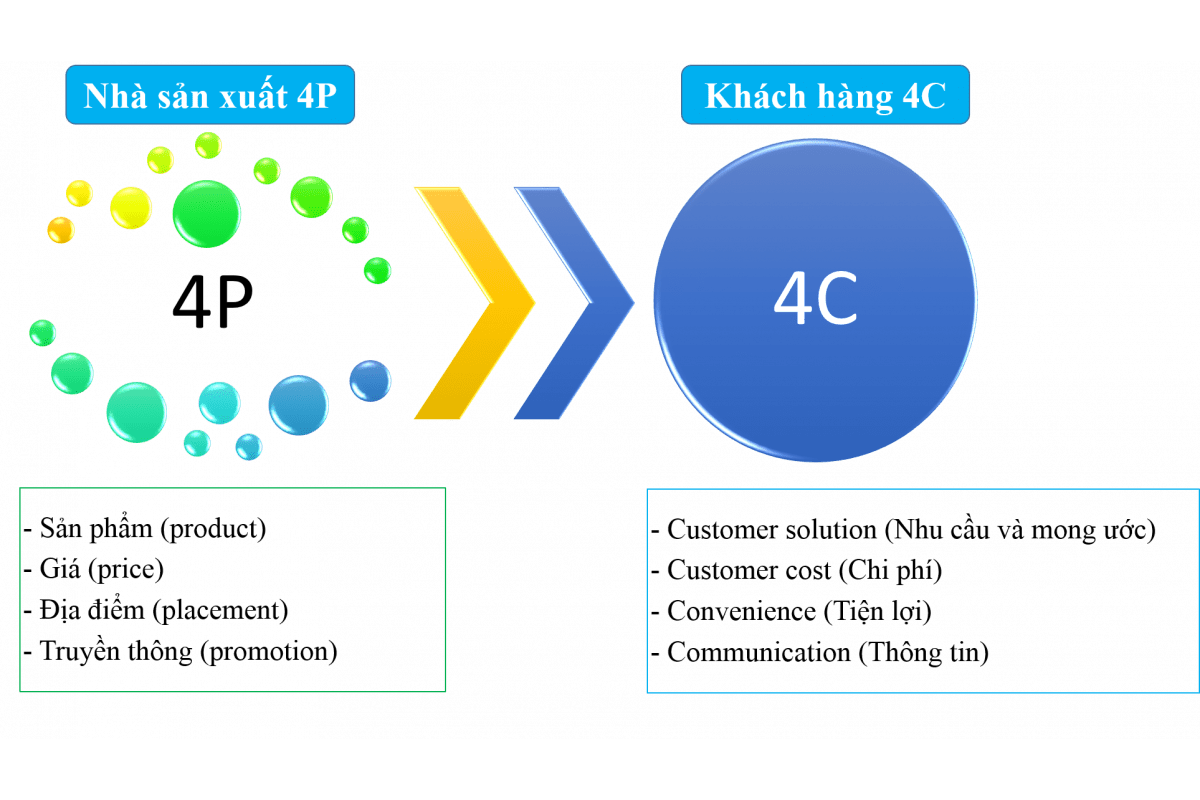
Whether you’re building a 4P, 7P, 9P, or even more-P marketing strategy, every P must come paired with a corresponding C (Customer). This reflects the “customer-centric” spirit that runs through the entire marketing campaign.
Case studies on the 4P strategy in Marketing
Starbucks’ 4P strategy
Starbucks, one of the world’s leading coffee shop chains, has made a powerful mark with over 17,000 stores spanning 50 countries. Starbucks is not just a place to enjoy coffee — it’s “a third place” besides home and work. Starbucks’ key strength is its wide variety of high-quality beverages. Let’s take a look at the 4P strategy Starbucks has successfully applied in its marketing campaigns.
Product
Starbucks constantly innovates to meet customers’ diverse needs. Initially focused only on coffee, Starbucks has expanded into many types of beans, roast levels, caffeine levels, and flavors. They also take advantage of special occasions to “refresh” the brand with seasonal products and limited editions. Starbucks’ research team takes care to ensure the product always attracts and retains customers.
Price
Starbucks focuses on delivering value to customers through quality products and a great experience. They consistently communicate the message that their price is synonymous with high quality, selected ingredients, and professional service. Starbucks is also creative in its pricing strategy, offering cheaper products combined with money-saving combos and supplementary services.
Place
Starbucks has optimized the third P — Place — to secure the number-one position in the coffee shop market, creating a distinctive and convenient experience for customers.
Starbucks builds a direct, personalized relationship with customers. Products are distributed through coffee shops, the online store, the Starbucks App, and retail stores. They also partner with hotels, airports, and office coffee shops, maximizing reach and profit.
Advertising/Communication (Promotion)
Starbucks is one of the brands that invests heavily in advertising and communication. They use many creative formats, from large-scale events to printing their logo on personal items. The Starbucks Gift Card is a subtle advertising strategy that attracts new customers through existing ones.
Mixue’s 4P strategy
Although Mixue entered the Vietnamese market back in 2018, it still faces fierce competition from brands with a long-established, strong presence. Surveys on ice cream and milk tea show that Mixue needs to innovate and strengthen brand recognition to attract younger customers. Mixue’s 4Ps strategy has proven its strength and importance in shaping their brand.
Product
Mixue pays attention to every aspect of the product, from quality to design and packaging. With over 30 items on the menu, they skillfully combine three main product groups — ice cream, fruit tea, and milk tea — creating a diverse experience for customers. Product quality is ensured by using ingredients produced in-house at their factory, keeping the flavor on par with pricier brands. The distinctive design and eye-catching packaging, along with the brand name “Mixue” (meaning “Honey Snow”), create a sweet and cool combination that brings customers special moments.
Price
Mixue uses a smart pricing strategy by leveraging production costs and competing on affordability. Buying ingredients directly from local sources helps reduce shipping and procurement costs, giving them competitive pricing. Mixue focuses on the budget segment, with prices ranging from VND 5,000 to VND 25,000, attracting lower-income customers and optimizing fixed costs per unit of product.
Place
Mixue’s vast distribution network ensures the product is available everywhere. They leverage a strong supply chain and franchise model to optimize costs and reduce losses. Store locations are chosen in areas with important ingredient sources, helping save on shipping costs and speed up supply. Mixue not only focuses on large storefronts but also expands into smaller provinces, targeting densely populated neighborhoods.
Advertising/Communication (Promotion)
Mixue is flexible in its marketing strategy, riding trends like Bing Chilling and creating its own brand mascot, the Snow King. Its presence on social media platforms and the application of a Cross-Selling strategy help boost brand recognition and positioning. They also use music in marketing, creating a new wave on platforms like TikTok, which not only generates interest but also saves on advertising costs.
Above are the things you need to know to get ahead of trends and seize opportunities for product launches. This is also how to build trust and establish a brand. For consulting and to implement the most optimal marketing method with a suitable full-package marketing strategy, please contact The7 via hotline: 084.397.77.77 or website: https://the7digital.com. This ensures your business has a resource-efficient Marketing 4P strategy that delivers results beyond expectations.You may also refer to these related articles:

Nguyễn Đình
Bảo




As CEO of The7, I am committed to sharing practical, useful knowledge with every reader. Every article on The7 is based on my 7 years of hands-on experience in marketing — Facebook advertising, LinkedIn advertising, Google advertising, and marketing strategy. I hope you take away plenty of insight from these posts and apply it successfully in practice.
Related Articles
Building a Full-Funnel Content Marketing Strategy on LinkedIn
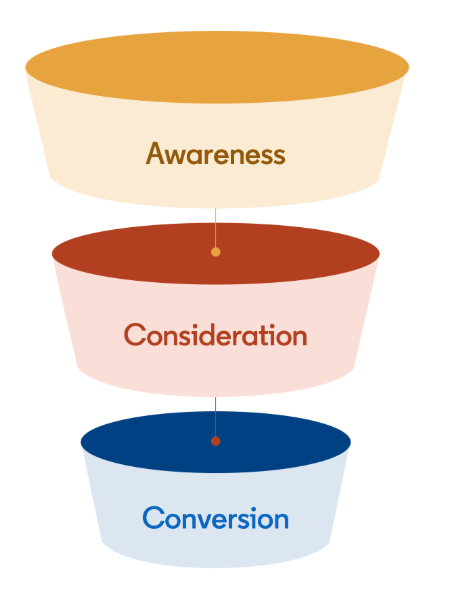
Table of Contents Toggle Why Build Content Marketing for the Full Marketing Funnel? (Why Full-Funnel Content Marketing?)Creating Your Strategy (Creating Your Strategy)Implementing Your Content Strategy (Rolling out your content strategy)Summary...
Designing Creative Content for LinkedIn
Table of Contents Toggle Why Is Good Creative Content So Important? (Why is Good Creative Important?)Key Components of Creative Design (the core elements of creative design)Summary (summary) Why Is Good...
Building an Organic Business Presence on LinkedIn With a LinkedIn Page
Table of Contents Toggle Why Have a LinkedIn Page?Establishing Your LinkedIn PageKeeping Your LinkedIn Page ActiveThe Measure of SuccessSummary About LinkedIn Page (Summary) Why Have a LinkedIn Page? For a...
6 Best LinkedIn Marketing Strategies for B2B in 2026
Table of Contents Toggle LinkedIn 2026: Where B2B Decisions Get MadeStrategy #1 – Why Is LinkedIn the Best B2B Marketing Channel Today?1. Decision-makers are concentrated here2. Users are in work...

7 Social Media Trends for 2026: The Era of Real Value, Real Conversion, and Real People
Table of Contents Toggle Social media is entering the biggest restructuring of the decadeTrend 1: Why is buying directly in-app becoming the new standard for 2026? (On-Platform Conversion)What should businesses...

What Is TikTok Marketing? Effective TikTok Marketing Strategies
TikTok has been topping the global rankings of the most downloaded and most visited apps. That makes it a gold mine for marketers who love creativity. In this article, The7...