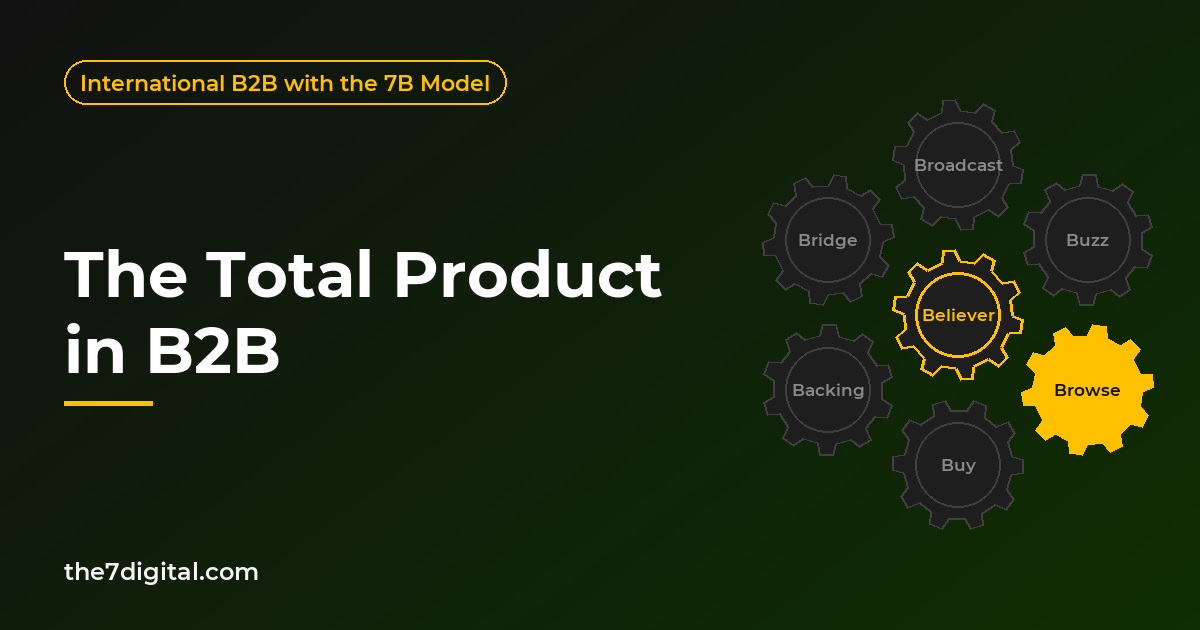
Summary: The total product concept says a B2B buyer purchases far more than the item itself: trials and demos before the sale, terms during it, installation, training and maintenance after delivery. Competitors can copy your spec sheet; they struggle to copy both ends. In the 7B Model, this sits on the Browse and Believer gears.
On 3 July 2019, Tetra Pak opened a plant in Binh Duong that it called Vietnam’s first aseptic carton packaging material factory: a 120 million euro investment, expandable to 20 billion packs a year, serving domestic customers and export markets in ASEAN, Australia and New Zealand (Tetra Pak, 2019). CEO Adolfo Orive tied the opening to a pledge “to be closer to our customers, to serve them faster and better.”
Read that pledge again. It says nothing about the carton’s specifications. It is about distance, speed and service, the outer layers of a product. A foreign supplier that enters Vietnam with a spec sheet and a distributor is betting those layers will take care of themselves. I would not.
This article asks where the rest of the product lives: Theodore Levitt’s total product, Professor Dae Ryun Chang’s two ends of a deal, how Hilti, Bühler and Tetra Pak build those ends, the first 90 days that decide who becomes a Believer, and what delivering all of it takes in Vietnam and ASEAN.
Do customers buy the drill or the hole?
Marketers love the line that nobody wants a quarter-inch drill; they want a quarter-inch hole. It is usually credited to Theodore Levitt. Yet according to Quote Investigator (2019), Levitt himself, in his 1969 book The Marketing Mode, attributed it to Leo McGivena, publicity manager of the New York Daily News.
In B2B the hole sits even further away. The installer drills to set an anchor bolt, the bolt holds a pipe run, the pipe run must be finished before handover, and the contractor gets paid only when the building passes inspection. What the contractor really buys is a schedule that does not slip.
The gap shows most clearly after signing: 81% of buyers express dissatisfaction with the providers they chose (Forrester, 2024). I read that as a sign that what buyers grade in the end is not entirely in the proposal.
Levitt’s 1980 Harvard Business Review article went further: “There is no such thing as a commodity.” All goods and services can be differentiated, it argued, industrial ones even more than consumer goods (Levitt, 1980). If you sell steel coil, resin or packaging and believe price is your only lever, that line was written for you.
What are the layers of the total product?
In that same article, Levitt distinguished the generic product from the expected product, the buyer’s minimal purchase conditions such as delivery, terms and support, according to a Bookshare summary. The idea is usually presented as four nested layers (Strategic Management Insight, 2026), which in a deal for a packaging line look like this:
| Layer | Standard term | The buyer’s question | Example |
|---|---|---|---|
| Core | Generic product | Does the machine do the job? | Meets the rated speed |
| Expected | Expected product | What is the minimum before I sign? | On-time delivery, warranty, documents |
| Augmented | Augmented product | What do I get that I never asked for? | A trial on the buyer’s own film, local-language training |
| Potential | Potential product | What else could keep me for years? | Remote monitoring, failure warnings |
The lines between layers move: what is augmented for one customer may be expected by another (Strategic Management Insight, 2026), and in my view today’s pleasant surprise becomes tomorrow’s minimum once competitors copy it.
Hilti: The drill maker that sells peace of mind
For Hilti, the drill story is literal. Its 25th-anniversary story (Hilti, 2026) traces Fleet Management to a customer’s question: “Can you completely take care of my tool park?” What the customer really wanted, Hilti says, was peace of mind. The service started with Bati Group in 2001, was piloted with eight customers in Switzerland, and by 2003 had reached Austria and Germany.
The offer goes beyond the tool: one monthly fee covers repairs or replacement, loan tools and theft coverage, so costs become predictable. ON!Track software shows battery health, utilization and location (Hilti, 2026).
Hilti’s 2021 company report counts more than 131,000 customers over 22 years and 3 million tools under Fleet agreements (Hilti, 2021), and it carries the best evidence. Zbynek Kosik, production manager at Chart Ferox in Děčín, Czech Republic, says hand tools used to be bought like consumables, with a mix of brands at every production station. When Hilti analyzed the tool park, his company expected another offer for tools and was surprised by how deeply the analysis reached into related processes. The average age of the tool park then fell significantly, and Kosik calls Hilti a very strong and reliable partner.
Read through Levitt’s layers (my reading, not Hilti’s words): the tool is the generic product; quality and durability are expected; the all-in fee with loan tools is the augmentation; data on batteries, usage and location is the potential product. The tool park analysis came before the offer, so the buyer verified Hilti through an experience, not a price list: the Browse gear at work. A younger tool park is the after-sales side, where Believers form. Hilti still sells drills. What keeps customers is the hole drilled on the right day.
Before, during and after the sale: where does the difference live?
Levitt gives us layers. Professor Dae Ryun Chang of Yonsei University adds a timeline. In his International B2B Marketing course on Coursera, he calls the three stages before, during and after the deal the Total Product System, and holds that differentiation can be built at any stage, usually more easily at the two ends. Who leads each stage is the subject of my article on the B2B marketing team, with the 7B Gear Captain Matrix.
Why are the ends easier? In my explanation, the middle is where everything has turned into text: specifications, prices, terms. Procurement lines the offers up and compares them row by row, and every matching row drags the deal toward a price haggle. At the two ends, the buyer scores you on an experience, not a comparison table: a trial run, a first week in which the machine just works.
Before the sale, the product is proof. Bühler, a Swiss technology group serving food and animal feed, runs application centers where customers bring their own raw materials and recipes to test and improve their processes (Bühler, 2021). A November 2023 release counts Application & Training Centers in 23 locations, with the Extrusion Application Center alone running 80 to 90 trials a year (Bühler, 2023).
Forrester (2026) reports that 78% of buyers making purchases of $10 million or more run a trial first, and Barbara Winters of Forrester advises vendors to design trials that prove long-term business value, so the trial opens the after-sales story. TrustRadius surveyed 1,862 technology buyers, who ranked product demos, free trials, prior experience and user reviews among the most influential resources (HG Insights, 2026). All four are real experience, not advertising.
The pre-sale layer can also mean engineers from both sides working from the first drawing, as my piece on early vendor involvement describes. When the buyer is far away, a video of the machine at work carries part of the trial to people who have never met you; YouTube for B2B covers the how. If you need someone to plan and run video ads for this stage, The7 does that within its comprehensive digital marketing services.
During the sale, the product is the terms. Tetra Pak goes further than Hilti’s monthly fee: according to Tetra Laval (2026), its Advanced Agreements guarantee outcomes such as overall equipment effectiveness (OEE), operational cost and uptime under a shared-risk model. The after-sales result is written into the contract. My piece on total cost of ownership shows how to turn a price haggle into a talk about lifetime cost.
After the sale, the product is the experience. Installation, commissioning, training, maintenance, spare parts: customers live with your product longest here, and results can be measured. Tetra Pak reports that in recent months its Advanced Agreements delivered an average 9% improvement in OEE, an 11% reduction in operational costs and a 94% renewal rate (Tetra Laval, 2026). These are the company’s own figures, but a renewal rate is belief you can measure.
How should you sell standard materials, modular parts, custom builds and services?
Not every B2B product needs the same total product. The risk the buyer fears most decides it, because the outer layers are how you take that risk off the buyer’s shoulders:
| Product type | Buyer’s main fear | Where the difference lives | Gear that turns hardest |
|---|---|---|---|
| Standard materials (steel coil, resin) | The next lot differs from the last | Documents, traceability, application support | Believer |
| Modular components (motors, pumps) | Will it fit my system? | Drawings, 3D models, samples | Browse |
| Engineered to order (molds, lines) | Delays, missed requirements | Joint engineering early, commissioning | Browse, Believer |
| Services (maintenance, software) | Quality cannot be seen in advance | A limited trial, the first 90 days | Believer |
Standard materials test Levitt’s claim hardest. On paper, your steel coil and your competitor’s share a grade, so the buyer is really buying certainty that the tenth lot matches the first, plus paperwork that survives its own customers’ audits. Every uneventful shipment is a seed planted for the Believer gear.
Modular components win or lose at verification: a form in front of drawings and configurators closes one of Browse’s gateways yourself. The same component can also be layered differently for each member of the buying committee, Narayandas’s value stack idea, which The Value Stack: Five Buyers, Five Products takes further.
How do the first 90 days after delivery create a Believer?
The Mô hình 7B cho B2B book (chapter 10) sets a marker: the first 90 days after signing are the window in which customers still ask whether they chose well. Evidence builds belief; silence lets doubt grow into regret. I keep the book’s three-stage rhythm and swap in examples for equipment and materials suppliers:
- Weeks 1 to 2, “I chose right.” A named owner makes contact on day one. A kickoff fixes goals and a baseline. Then a small, visible win: the machine hits spec on its trial run, or the first shipment arrives on time with its inspection report.
- Weeks 3 to 8, “here is the proof.” Proactive contact that tapers but never stops. Reach the operators who run the machine daily and will praise or blame you to their managers. Every two to four weeks, send numbers against the baseline.
- Weeks 9 to 12, “I am ready to tell others.” Review the full 90 days, then ask how likely the customer is to recommend you on a scale of 1 to 10. Nine or ten: invite a success story, a review, a referral. Seven or eight: ask what is missing. Below seven: call now and fix it.
Why is this marketing’s job? Because today’s after-sales experience is tomorrow’s pre-sale evidence. One customer who comes through the first 90 days well can give you a success story, a video, a review and a referral (Mô hình 7B cho B2B book, chapter 10). Much of the rest travels through dark social: an engineer telling a former colleague your machine ran smoothly from week one, in a conversation you will never see. Kosik’s remarks in Hilti’s own report are the rare case that went public: a Believer turned into Backing, a customer speaking up on the supplier’s behalf.
Where does the total product fit in the 7B Model?
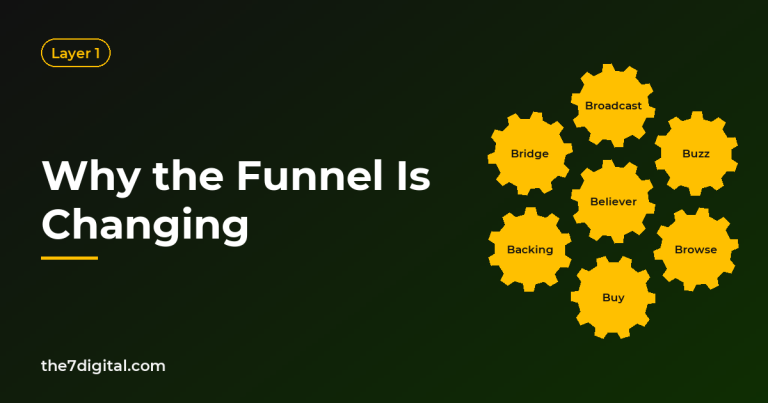
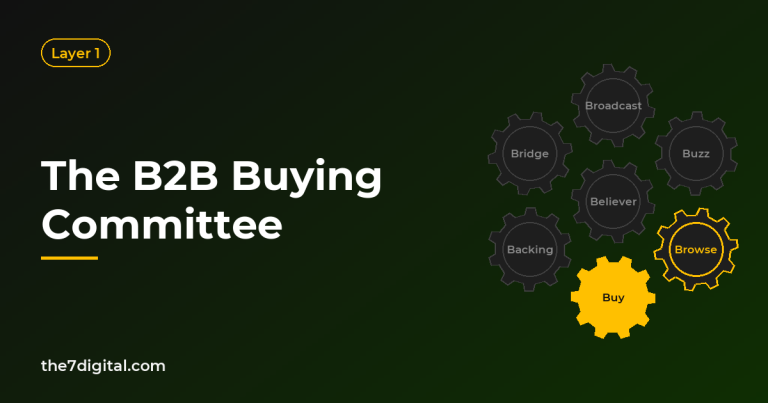
The total product turns on two gears. The first is the Browse gear. Its definition: Where emotion meets reason: buyers verify and compare you through six gateways. Samples, trial runs, drawings and installation videos are what buyers look for at those gateways, from search engines to YouTube; without them, Browse has nothing to verify.
The second is the Believer gear. Its definition: Customers who do not just buy but believe, through real experience after the deal. A successful trial run is the Buy gear’s trial step and plants trust before an order exists (Mô hình 7B cho B2B book, chapter 9); the first 90 days, and renewals like Tetra Pak’s, turn that trust into a Believer.
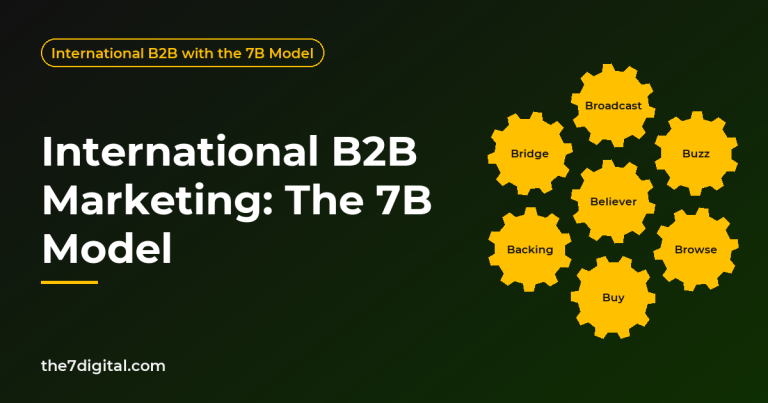
Across the three operating layers, Browse belongs to demand capture (Browse, Buy), the layer that is about converting demand into orders, and Believer is the connecting loop. The loyalty loop traces the path: Believers create Backing, Backing creates Bridges, and Bridges bring new people back into Broadcast, Browse and Buy. The three energy flows divide the work: owned (documentation, demo videos, configurators; see B2B content marketing), paid (video ads while buyers research) and earned-and-shared (customers telling your story).
The 7B Glossary defines every gear, and the 7B Model is the place to start. The 7B Model was developed by Nguyen Dinh Bao (Bao7) at The7 Digital and is set out in full in the book Mô hình 7B cho B2B (Stop Begging, Start 7B).
Selling B2B into Vietnam and ASEAN
Plants are running harder. Vietnam’s manufacturing and processing industry grew 12.9% on the index of industrial production in the first nine months of 2026, against 10.3% a year earlier (National Statistics Office, 2026). My reading: when output grows that fast, an hour of downtime costs a plant more than it did a year ago, so buyers grade suppliers on uptime, speed of response and spare parts on the shelf.
Training belongs to the expected product. In the same nine months, 29.9% of workers had formal training with a degree or certificate (National Statistics Office, 2026), while human capital topped the list of Vietnam’s competitive advantages at 52% in EuroCham’s Business Confidence Index survey for the third quarter of 2026, just ahead of cost competitiveness at 51% (EuroCham Vietnam, 2026). A degree says little about your particular machine, though. On-site operator and maintenance training in Vietnamese is what gets your line running, and buyers will treat it as the minimum, not a bonus.
A challenger competes on the outer layers. In May 2025, the Chinese forklift and AGV maker Hangcha opened Hangcha Forklift Vietnam in Dong Nai, selling and renting forklifts and offering spare parts, lithium battery solutions, AGVs and service support. Its chief accountant said Hangcha sold more than 100,000 units overseas in 2024, with Southeast Asia leading the growth (Forkliftaction, 2025). Rental lets a buyer try before buying; parts and local service are the after-sales experience. This rival is not selling a spec sheet.
Bring the trial within reach. Distance is part of the product. Tetra Pak built a plant in Binh Duong. Bühler and its partners opened a Protein Innovation Centre in Singapore in 2021 (Bühler, 2021); Singapore is in ASEAN, Uzwil is not. You do not need a factory to follow the principle: bring the trial to the buyer, not the buyer to your headquarters, through a partner’s line in the region, a demo site, or a film of your machine running a material like the buyer’s.
Design the first 90 days before you ship. With time zones in the way and engineers who cannot drop by every week, name an owner who speaks Vietnamese, hold the kickoff at the plant or online, send training videos in Vietnamese, pack spare parts with the first order, and ask the 1 to 10 question in week 12. A plant manager whose first 90 days went well becomes your most credible voice with peers, in conversations you will never see.
Conclusion: Customers buy the machine but stay for the hole
Back to Binh Duong. I read Tetra Pak’s plant as a decision to shorten the road between a promise and the customer’s factory, and that road is the real product.
Levitt reminds us there is no such thing as a commodity. Professor Chang holds that differentiation is usually easier at the two ends. The 7B Model adds one clause: those ends are where Browse and Believer turn, where today’s customer becomes tomorrow’s proof. Selling the machine is the work of the middle. Keeping the customer is the work of the whole road.
Next, The Value Stack: Five Buyers, Five Products rearranges value for each person at the table. For a company that sells flying hours instead of engines, read Rolls-Royce sells flying hours. The pillar article on international B2B marketing with the 7B Model holds the big picture, and B2B positioning is the next step for your brand.
Frequently asked questions
What is the total product concept?
It is everything a customer receives around the core item. Levitt (1980) distinguished the generic product from the buyer’s minimal purchase conditions, such as delivery, terms and support; the idea is usually presented in four layers: generic, expected, augmented and potential. In B2B, most differentiation sits in the outer layers.
How is the total product different from customer service?
Customer service usually starts after the sale and belongs to one department. The total product starts before the order and needs engineering, sales, marketing and service working together.
Do I need a local presence in Vietnam to offer a total product?
Not necessarily a factory. Start with the layers buyers notice first: a named owner for the first 90 days, operator training in Vietnamese, spare parts shipped with the first order and a local partner who can reach the plant fast. Tetra Pak in Binh Duong and Hangcha in Dong Nai show the full version.
Why do the first 90 days after delivery matter so much?
Because customers are still testing their own decision. The Mô hình 7B cho B2B book (chapter 10) splits the period into three stages: an early small win, proof in numbers, then asking whether the customer would recommend you. Customers who go through all three are more likely to become Believers.
International B2B with the 7B Model · Part 11 of 24 · Previous: Trade Shows in the 7B Machine · Next: The Value Stack: Five Buyers, Five Products · Pillar article: International B2B Marketing: The 7B Model
References
- Tetra Pak (2019). Vietnam’s first carton packaging material factory. https://www.tetrapak.com/en-vn/about-tetra-pak/news-and-events/newsarchive/vietnams-first-carton-packaging-material-factory
- Quote Investigator (2019). Quote Origin: No One Wants a Drill. What They Want Is the Hole. https://quoteinvestigator.com/2019/03/23/drill/
- Forrester (2024). Forrester: To Master B2B Buying Mayhem, Providers Must Prioritize Buyers’ Needs. https://www.forrester.com/press-newsroom/forrester-the-state-of-business-buying-2024/
- Levitt, T. (1980). Marketing Success Through Differentiation of Anything. Harvard Business Review. https://hbr.org/1980/01/marketing-success-through-differentiation-of-anything
- Bookshare (1980). Marketing Success Through Differentiation of Anything, summary of T. Levitt’s article (Harvard Business Publishing). https://www.bookshare.org/browse/book/1327308
- Jurevicius, O., Strategic Management Insight (2026). Whole Product Concept Explained. https://strategicmanagementinsight.com/tools/whole-product-concept-explained/
- Hilti Group (2026). 25 Years of Fleet Management: Built Through Partnership. https://www.hilti.group/content/hilti/CP/XX/en/company/media-relations/hilti-stories/twenty-five-years-of-fleet-management-built-through-partnership.html
- Hilti Group (2021). Continuous Improvements for Tool Fleet Management, Hilti 2021 Company Report. https://reports.hilti.group/2021/our-strategy/product-and-service-differentiation/continuous-improvements-for-tool-fleet-management
- Chang, D. R., Yonsei University (n.d., accessed 9 November 2026). International B2B (Business to Business) Marketing, Coursera course. https://www.coursera.org/learn/b2b-marketing
- Bühler Group (2021). Our application centers, Bühler Annual Report 2021. https://annualreport.buhlergroup.com/reports/en_21/home/next-level-stories/turning-innovation-into-application.html
- Bühler Group (2023). Bühler boosts food innovation with new Application & Training Centers in Uzwil. https://www.buhlergroup.com/global/en/media/media-releases/buehler-boosts-food-innovation-with-new-application—training-c.html
- Forrester (2026). Forrester’s 2026 Buyer Insights: GenAI Is Upending B2B Buying As Leaders Face Mounting Pressure To Justify Every Dollar Spent. https://www.forrester.com/press-newsroom/forrester-2026-the-state-of-business-buying/
- HG Insights (2026). TrustRadius 2026 B2B Buying Disconnect Report Reveals AI Has Changed How Buyers Research, But Not What They Trust. https://hginsights.com/news/trustradius-2026-b2b-buying-disconnect-report-reveals-ai-has-changed-how-buyers-research-but-not-what-they-trust/
- Tetra Laval (2026). Tetra Pak Advanced Agreements Gain Global Recognition for Delivering Measurable Business Impact. https://www.tetralaval.com/news/Tetra-Pak-Advanced-Agreements-Gain-Global-Recognition-for-Delivering-Measurable-Business-Impact
- National Statistics Office of Vietnam (2026). Press release on the socio-economic situation, third quarter and nine months of 2026 (Vietnamese). https://www.nso.gov.vn/du-lieu-va-so-lieu-thong-ke/2026/10/thong-cao-bao-chi-tinh-hinh-kinh-te-xa-hoi-quy-iii-va-9-thang-nam-2026/
- EuroCham Vietnam (2026). EuroCham Business Confidence Index Q3 2026: Translating Economic Gains Into Business Opportunities. https://eurochamvn.org/eurocham-business-confidence-index-q3-2026-translating-economic-gains-into-business-opportunities/
- Forkliftaction (2025). Hangcha opens Vietnamese sales centre. https://www.forkliftaction.com/news/hangcha-opens-vietnamese-sales-centre.aspx?n=31274